Herpetological Handling and Behavioral Conditioning
Associate of Applied Science · 62 credit hours · 4 semesters · Division of Animal and Agricultural Sciences
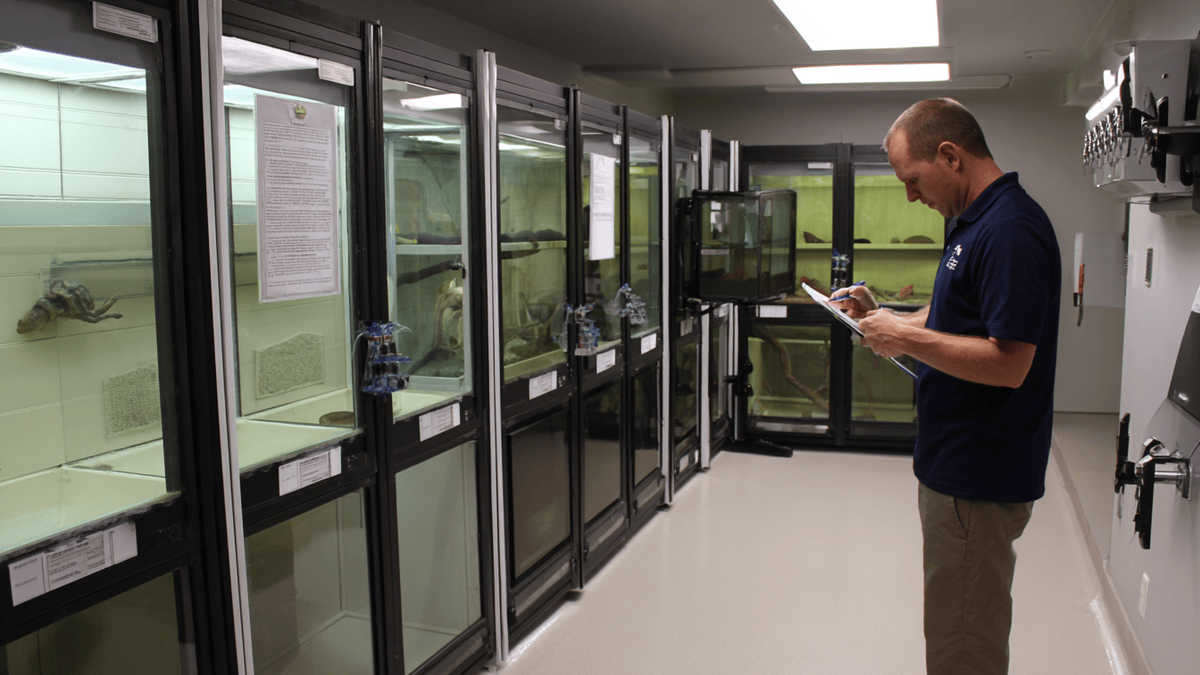
The program prepares graduates for employment in reptile husbandry, exhibition handling, and applied behavioral conditioning of squamates and crocodilians. Graduates are employed by zoological facilities, private collections, film and television animal units, and exotic veterinary practices.
In HERP 240, each student is assigned one animal for the full term and is responsible for its daily care, including weekends and the Thanksgiving recess. Students with documented travel obligations during Thanksgiving recess must arrange a care swap with a classmate in writing and file the agreement with the lab coordinator no later than the seventh week of the term. HERP 240 must be completed with a grade of C or higher for capstone eligibility. Two attempts are permitted.
Current tetanus documentation is required before enrollment in HERP 155 and is maintained at the student's expense. HERP 268, Venomous Species Protocol, is a restricted course requiring Division Chair approval and a signed acknowledgment on file, and is not offered every term.
Concentrations
Venomous Species
Extends HERP 268 into a supervised sequence: venomous husbandry, protected-contact protocol, antivenom logistics and incident planning, and regulatory compliance for restricted species. Admission by Division Chair approval following completion of HERP 268 with a grade of A.
Coordinator: Ardis Vennemann, D.V.M.. Enrollment is limited to 4 students per year, a limit set by supervision ratio and not subject to petition. Added by Addendum No. 1, adopted by the Curriculum Committee.
Curriculum
| Course | Title | Credits | Term |
|---|---|---|---|
| HERP 101 | Introduction to Squamate Husbandry | 3 | 1 |
| HERP 120 | Reptile and Amphibian Biology | 3 | 1 |
| ANM 101 | Animal Husbandry Fundamentals | 3 | 1 |
| ENG 121 | Composition I | 3 | 1 |
| MAT 104 | Applied Mathematics | 3 | 1 |
| GEN 101 | College and Career Success | 1 | 1 |
| HERP 155 | Restraint and Transport | 4 | 2 |
| HERP 165 | Enclosure Systems and Life Support | 3 | 2 |
| HERP 170 | Nutrition and Feeding Response | 3 | 2 |
| HERP 175 | Husbandry Records and Reporting | 2 | 2 |
| HERP 210 | Conditioning Practicum I | 4 | 2 |
| HERP 240 | Conditioning Practicum II | 5 | 3 |
| HERP 230 | Exhibition and Program Handling | 3 | 3 |
| HERP 235 | Health Monitoring and Quarantine Protocol | 4 | 3 |
| COM 110 | Oral Communication | 3 | 3 |
| HERP 260 | Crocodilian Husbandry and Handling | 4 | 4 |
| HERP 290 | Capstone Practicum | 5 | 4 |
| ANM 210 | Facility Operations and Records | 3 | 4 |
| BUS 210 | Small Business Operations | 3 | 4 |
Student outcomes
| Measure | Rate |
|---|---|
| Completion within 150% of published length | 68.4% |
| Placement in field or related field | 91.7% |
Rates are calculated under the methodology statement of record (rev. 2025-08-15).
Graduates
I was assigned my animal in HERP 240 the same week my apartment lost heat. I moved the practicum schedule, not the animal’s. Employers can tell which schools teach it that way.
Cheyenne Bagsby, ’26 — Keeper I, zoological facility, Columbus
Facilities and instruction
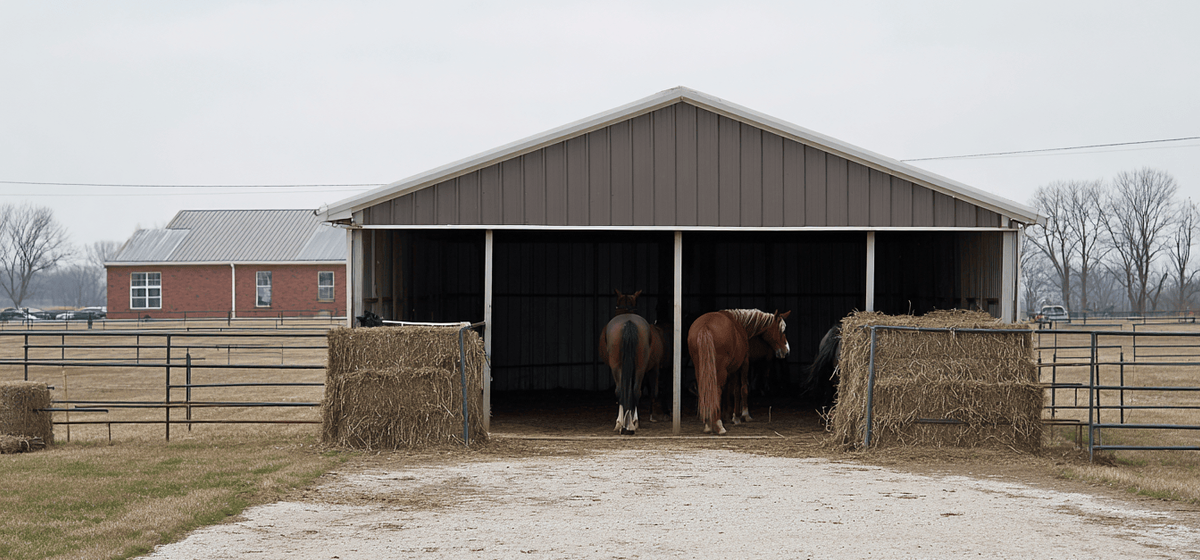
Instruction is delivered in the facilities of the Division of Animal and Agricultural Sciences. Additional photographs are collected at Campus photographs.
programs/herpetological-handling · Bellweather College of Applied Technology